The Quiet Kettlebell Week: Strength Training for Small Flats and Thin Walls
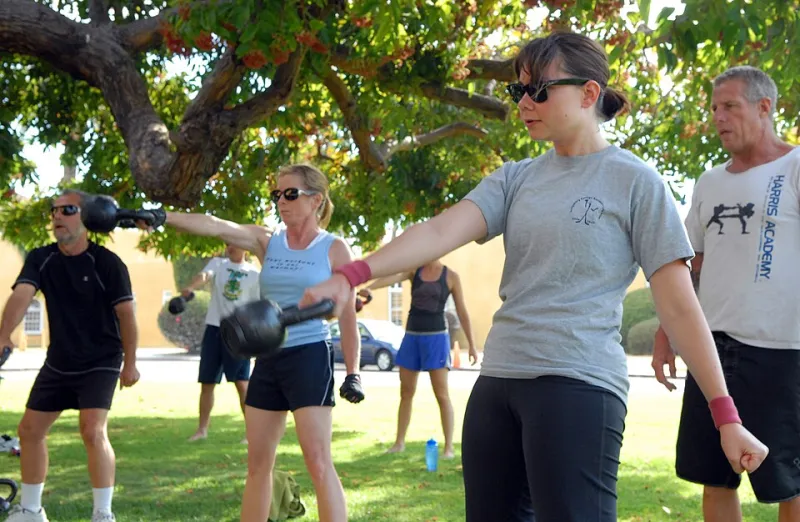
Photo: Unknown, Public domain, via Wikimedia Commons
Renting in the UK often means three things: floor space measured in yoga mats, walls you can hear next door's telly through, and a gym membership that competes with your broadband bill. None of that stops you getting stronger. You need one kettlebell — or a backpack with a few books and water bottles in it — a chair, and a patch of floor about two metres square. This is a week built from seven ten-minute blocks. Do two on a busy day, three on a good one, and don't panic if no two weeks look the same.
The kit, and the no-kit version
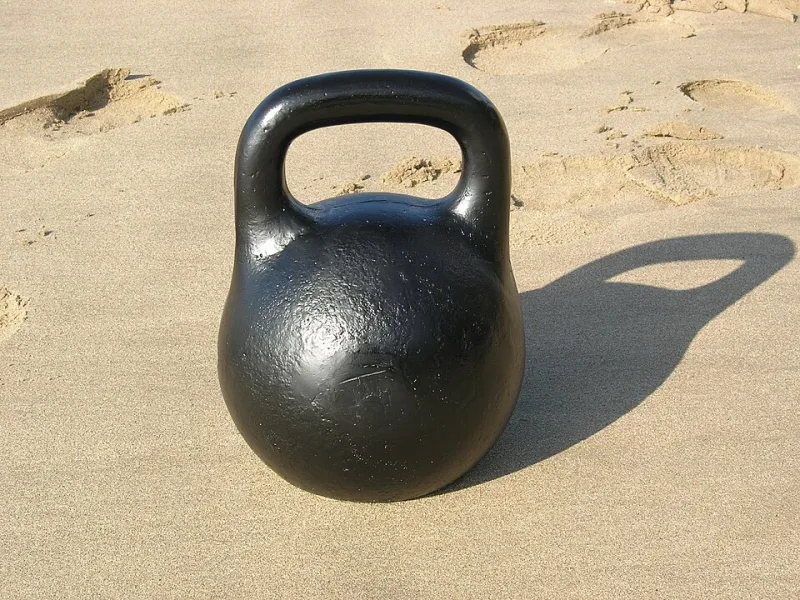
A single kettlebell between 8kg and 16kg will cover most people for a long time. If you're new to strength work, start at the lighter end. If you already lift, go heavier rather than adding more exercises. No kettlebell? A sturdy backpack works. Fill it with books, bottles or bags of rice, check the seams, and hold it close to your body. You also need a normal dining chair, a towel or mat, and enough space to lie down without headbutting a wardrobe.
Skip the wall-mounted pull-up bar, the doorframe gym and anything that involves jumping. In a rented flat, quiet is a feature, not a compromise.
The seven blocks
Each block is ten minutes. Warm up for three to five minutes first with marching, arm circles, hip circles and a few slow bodyweight squats. Then pick your blocks.
-
Hinge block. Kettlebell deadlifts, Romanian deadlifts and single-leg deadlifts holding the chair. Three rounds of eight to ten reps, resting 30 to 45 seconds. Keep the weight close and the movement slow. This is the block that looks after your lower back and hamstrings.
-
Squat block. Goblet squats, chair squats and split squats. If the ceiling is low, hold the kettlebell at your chest rather than overhead. Three rounds of eight to twelve reps. Pause for a second at the bottom; it makes light weights feel heavier without making noise.
-
Push block. Floor press with the kettlebell or backpack, kneeling press, and press-ups with hands on the chair seat if the floor version is too much. Three rounds of six to ten reps. The floor press is the renter's bench press: effective, quiet and hard to break.
-
Pull block. Single-arm rows with the kettlebell, bent-over rows with the backpack, and a towel row looped around a solid chair leg if you're careful. Three rounds of eight to twelve reps per side. Pulling is the block most home plans forget; don't be that plan.
-
Carry block. Suitcase carry up and down the hallway, farmer carry with two bags, or a racked carry in place if the hallway is blocked. Three rounds of 30 to 40 seconds per side. Carries teach your trunk to work while you move, which is most of real life.
-
Core block. Dead bugs, bird dogs, plank and suitcase hold. Two or three rounds of 30 to 45 seconds. No sit-ups required, no crashing about on the floor.
-
Get-up block. Half get-ups from the floor to the elbow, then to the hand, then to a lunge; sit-to-stands from the chair; and a slow Turkish get-up with a shoe or small bag if you're confident. Three rounds of two to three reps per side. This is the block for people who want to feel capable, not just tired.
A realistic week
Monday: hinge and push. Wednesday: squat and pull. Friday: carry, core and get-up. That's three sessions of 20 to 30 minutes, which is enough to build strength when the reps are honest. If Wednesday disappears because of work, move the squat block to Friday and do core on Saturday morning. If you're in a shared house and the living room is occupied, do the whole thing in your bedroom. Ten minutes in a bedroom beats a perfect plan you never start.
Making it work in a cramped room with thin walls
Use tempo. A three-second lowering phase on a goblet squat or row makes a light weight feel much heavier, and it makes no sound at all. Add pauses: two seconds at the bottom of a squat, two seconds at the top of a row. Use single-leg and single-arm versions to increase difficulty without adding plates. Swap kettlebell swings for deadlifts if you're worried about the floor or the ceiling. Put a towel or mat down. Never drop the weight. Train at sensible hours, and if you're friendly with the neighbours, tell them you're doing a short strength session a few times a week — most people are fine once they know it's not a 6am drum kit.
Progressions that don't need more space
Add one or two reps per set. Slow the lowering phase. Add a pause. Move from two legs to one. Move from two arms to one. Increase the weight in the backpack. Reduce the rest from 45 seconds to 30. Any one of those is progress. You don't need a bigger flat; you need a slightly harder version of the same ten minutes.
The rule that matters
Consistency beats intensity when your training space is also your kitchen, bedroom and drying-rack zone. Aim for three short sessions a week, not a perfect programme. If you only manage one block after a long shift, do the hinge block and go to bed. That still counts. Start light, learn the movements, and stop if something hurts in a sharp or jointy way. This is general fitness advice, not a substitute for a physio or GP.
Seven blocks, one kettlebell, one chair and a bit of floor. That's a gym you can fit in a rental — and one that won't get you a deposit deduction.