The Hi-Vis Leg Day: Why Your Saturday Parkrun Shift Still Counts
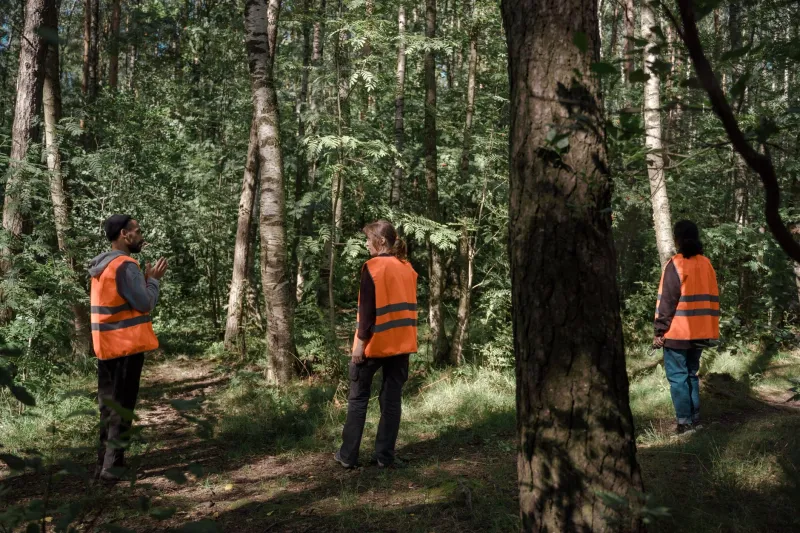
Saturday morning, 8:45am. The car park is filling up, someone is wrestling a flag into the ground, and you are zipping up a hi-vis vest instead of lacing up your running shoes. If you have ever stood at the finish funnel while the first runners stream past and thought, “I’m not really training today,” this one is for you.
Volunteering at parkrun is not a fitness write-off. It is just a different kind of session — lower intensity, more stop-start, and heavily disguised as admin. The trick is to stop thinking of it as a lost workout and start treating it as a block-based movement morning. You are still on your feet, still moving, still loading your legs and still practising the kind of everyday strength that keeps busy UK adults feeling capable.
The fitness ledger problem
Most of us carry a mental fitness ledger. A run goes in the good column. A gym session goes in the good column. Standing in a park for an hour holding a clipboard feels like it belongs in the “neither here nor there” column, somewhere between a dog walk and waiting for a takeaway.
That ledger is too narrow. A volunteer shift involves repeated standing from a squat, walking across uneven grass, lifting token trays and kit bags, twisting to scan barcodes and holding a stable position while a stream of people move past you. None of it is glamorous. All of it counts.
The BlockFit approach is to break the morning into manageable chunks rather than expecting one big workout. Think of your shift as three blocks: before the first finisher, during the quiet middle, and after the tail walker. You are not trying to turn parkrun into a bootcamp. You are simply using the time you have already given up to move a bit more deliberately.
Block one: before the first finisher
This is the setup block. You might be helping with the finish funnel, carrying the token box, setting out signs or walking to your marshal point. It is easy to rush this bit, especially if you are cold and wondering whether you should have brought a second fleece.
Use the ten or fifteen minutes before the first runner arrives as a mobility and load block. Walk briskly to your position rather than ambling. Carry the kit bag with both hands and a bit of intent. When you set down the token table or adjust a cone, hinge at the hips and bend your knees instead of folding over like a deckchair.
If you are marshalling, use the wait time for a few gentle heel raises, some slow calf stretches against a kerb, or a handful of shoulder rolls. Nothing dramatic. You are not trying to impress anyone. You are just reminding your body that it is awake and involved.
Block two: the quiet middle
The first finishers come through fast and loud, then the stream thins out. This is the quiet middle — the bit where volunteers often freeze in place and watch the path. It is also the best window for a stealth strength block.
If you are scanning barcodes, you are already doing repeated mini-squats every time someone hands you a token. Make them count. Instead of bending from the waist, soften your knees, keep your chest tall and stand back up with control. You will scan just as quickly, and your legs will get a surprisingly decent set of repetitions.
If you are in the funnel, use the gaps to shift your weight from foot to foot, do a few slow sit-to-stands from a bench, or hold a gentle isometric squat for ten seconds while you keep an eye on the finish line. If you are marshalling on a corner, walk a few paces back and forth rather than becoming a statue. Standing still for twenty minutes is not a neutral act; it makes everything feel stiffer afterwards.
The key is to stay subtle and stay useful. You are a volunteer first. The movement is a bonus, not a performance.
Block three: after the tail walker
When the tail walker comes through, the pressure drops. Now you can collect signs, fold the funnel tape, carry token trays back to the kit bag and walk the route back to the start. This is your carry-and-reset block.
Use it properly. Carry one heavier bag rather than three light ones if it is safe to do so. Walk back at a decent pace. If you are helping pack down, use the repeated lifting and lowering as a mini strength circuit: squat down, stand up, carry, set down. You are not chasing a personal best. You are simply finishing the morning with a bit more movement than you would have managed if you had stayed in bed.
Then have the brew. You have earned it.
Why this matters for busy lives
Most of us do not have a spare hour to add a separate workout to Saturday morning. We have family stuff, shopping, football fixtures, DIY and the small matter of wanting to sit down at some point. Volunteering already takes a chunk of time, so it makes sense to get some movement value from it rather than writing the whole morning off.
This is not about turning every helpful act into a training session. It is about recognising that everyday movement has a place in a fitness plan, especially for busy adults who are trying to build strength without living in the gym. Three gentle blocks across a volunteer shift will not replace a proper leg day, but they will keep you ticking over, loosen up your hips and calves, and make the rest of Saturday feel a little less creaky.
So next time you pull on the hi-vis, do not mentally cancel your session. Marshal, scan, squat, carry, walk and pack down. Your legs will thank you — and the barcodes will still get scanned.